
Description
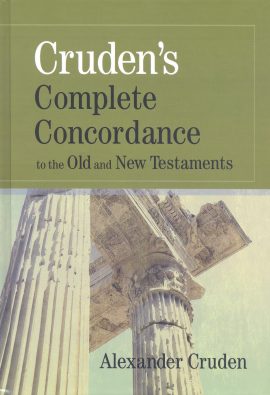
King James Version. Hardcover.
Additional information
| Weight | 0.00000000 lbs |
|---|---|
| Dimensions | 0.00000000 × 0.00000000 × 0.00000000 in |
| Level | |
| Publisher |
Related Products
Mystery of Christ in the Revelation
A thorough examination of the Book of Revelation that uses the scriptures to interpret the book. This is a lengthy work, but it attempts to explain the meaning of the symbols and the important lessons that are to be found in the Book of Revelation. Though we might differ in our opinions on some of the details, we believe the interpretation in general is in agreement with our belief and the historic Anabaptist view of the Revelation. 616 pages; hardcover.
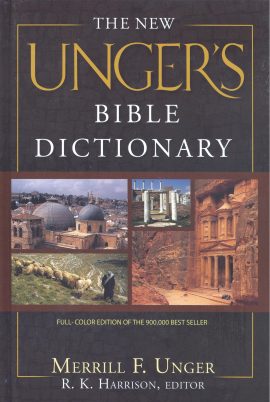
The New Unger’s Bible Dictionary
A newly revised edition of one of the most complete, comprehensive, and up-to-date Bible dictionaries available today. Scholarly, with current articles on archaeology, geography, chronology, and other areas of biblical information. Includes color pictures. 1408 pages; hardcover.
The Shadow of the Cross
A book describing many of the types and shadows from the Old Testament which teach us about Christ and the New Testament. This book was written to show the marvelous design of the Bible and that only God could have been the author. Chapters discuss topics such as Bible numbers; the trees in the garden of Eden; Eve and the church; Noah and the ark; types in the lives of Jacob, Joseph, Moses, and Aaron; and much more. 206 pages; paper.
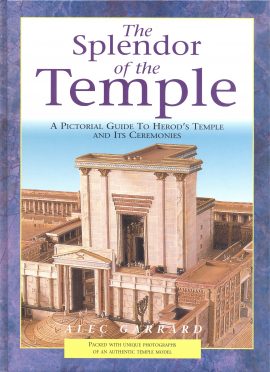
The Splendor of the Temple
This book is a study of Herod’s Temple, which was a reconstruction of Solomon’s earlier work. This full-color book is filled with beautiful photographs of a scale model of Herod’s temple. Those interested in Bible history will find this book interesting and helpful. 96 pages; hardcover.
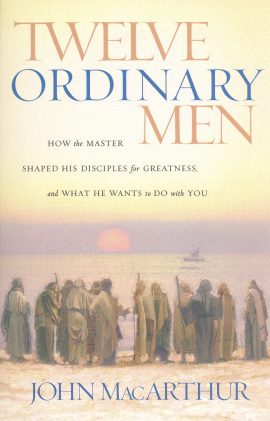
Twelve Ordinary Men
They were not scholars or religious sages, so why did Jesus select these twelve men? The group included common fishermen, a hated tax collector, and an impulsive political zealot. But they answered Jesus’s call and became the first leaders of the church. 201 pages; paper.
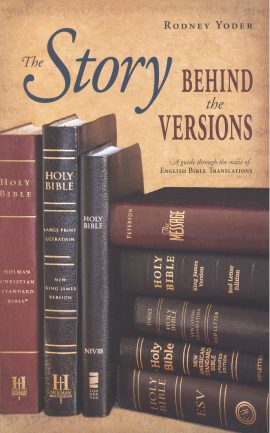
Story Behind the Versions
This book tells how the Scriptures have been preserved and lays out the principles and philosophy of translation. Then, it explores the history and trustworthiness of modern versions and gives guidance for making wise decisions about Bible translations. 203 pages; paperback.
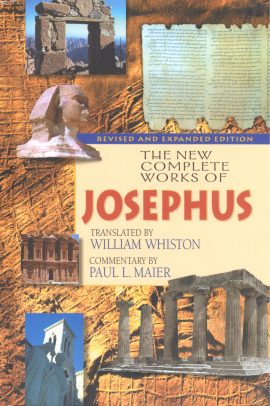
The New Complete Works of Josephus
Flavius Josephus, translated by William Whiston. This classic work will make you a part of the momentous events of Jewish history from creation to the time of Titus, who destroyed Jerusalem during the first century AD. Men through the ages have looked to this work as the only contemporary reference in history containing valid references to Christ. 778 pages; hardcover.