Description
King James Version. Hardcover.

King James Version. Hardcover.
| Weight | 0.00000000 lbs |
|---|---|
| Dimensions | 0.00000000 × 0.00000000 × 0.00000000 in |
| Level | |
| Publisher |
In this book, Byler gives us a brief overview of the book of Revelation and what he believes is the historic Anabaptist understanding of the book. Though not exhaustive, he gives a chapter-by-chapter introduction and tries to help the reader to understand what the symbolism could represent. 64 pages; paper.
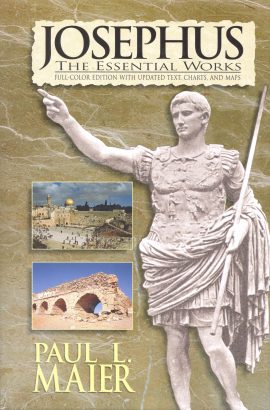
Translated and edited by Paul L. Maier. This volume contains the same text as Josephus: the Essential Writings, but is bound in hardcover and has quality paper, color photos, time lines, and other information in sidebars that makes the volume more readable and appealing. 416 pages; hardcover.
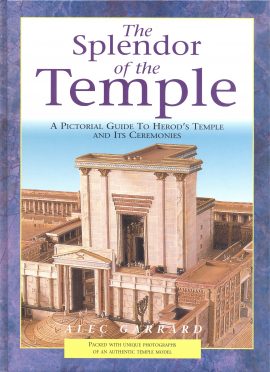
This book is a study of Herod’s Temple, which was a reconstruction of Solomon’s earlier work. This full-color book is filled with beautiful photographs of a scale model of Herod’s temple. Those interested in Bible history will find this book interesting and helpful. 96 pages; hardcover.
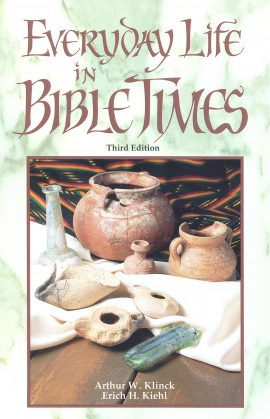
Have you ever wondered what life was like in the days of the Old and New Testaments? What were the predominant occupations and trades? What types of homes did the people of the Bible live in? What social customs prevailed? Readers will gain valuable insight and information into the society, culture, and everyday lives of people in Bible times. 172 pages; paper.